


If the well being check fails, the DNS report is mechanically updated to remove the primary server’s IP handle and return only the secondary server’s handle, redirecting all new client connections to the backup. This reduces latency for customers by making certain they hook up with a server that’s bodily nearby, minimising the number of community hops and the speed-of-light delay inherent in long-distance connections. DNS load balancing improves efficiency by distributing site visitors across multiple servers, stopping any single server from changing into overloaded.
- By combining the two technologies, this unified answer addresses a critical hole…
- TRILL (Transparent Interconnection of Tons of Links) facilitates an Ethernet to have an arbitrary topology, and permits per move pair-wise load splitting by means of Dijkstra’s algorithm, without configuration and person intervention.
- DNS load balancing distributes incoming community visitors across multiple servers by returning different IP addresses in DNS question responses.
- Organizations need a DDoS strategy that may sustain with essentially the most advanced assaults — with out taking on even more of their safety and IT teams’ restricted time.
This revolutionary method goes past conventional static load balancing methods by dynamically adjusting traffic distribution based on real-time situations. They complement traditional load balancing approaches and providing enhanced performance for globally distributed purposes. As beneficial as it is, it’s not without its limitations – as we simply discussed above.
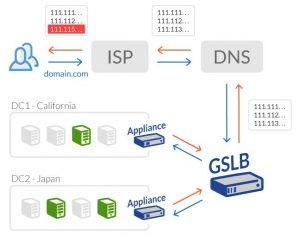
By controlling which addresses are returned and in what order, you probably can distribute traffic across your infrastructure. For e-commerce sites, healthcare platforms, and revenue-critical purposes, an outage is not simply an inconvenience. It should be paired with DNSSEC, rate limiting, and DoT/DoH for safety. Choose routing algorithms (round-robin, weighted, geo), set applicable TTL values, enable health checks, and take a look at routing behavior throughout international places. DNS load balancing consists of a quantity of distribution methods, every suited to completely different necessities.
Server Well Being Monitoring By Load Balancers (up Or Down)
By ensuring that no single server was overwhelmed, the website’s efficiency significantly improved during peak durations. They distributed incoming traffic throughout multiple backend servers, and by doing so, they were able to efficiently manage the spikes in consumer requests. By spreading the demand on your site across a quantity of servers, DNS load balancing can reduce your response occasions and decrease server bottlenecks. Based Mostly on what we’ve mentioned thus far, you probably already have a good idea of why it’s sensible to make use of DNS load balancing on your website – significantly when you have a high-traffic site.
Nevertheless, they may not help geo DNS and they may introduce an additional level of failure or complexity. Load balancer software, corresponding to HAProxy, Nginx, or Apache can also act as DNS servers and assist round-robin, weighted, or failover DNS. These IWIHOST software program often support round-robin DNS and some of them also assist weighted or geo DNS. To implement DNS load balancing, you need to use a DNS supplier or software program that supports the tactic you choose.